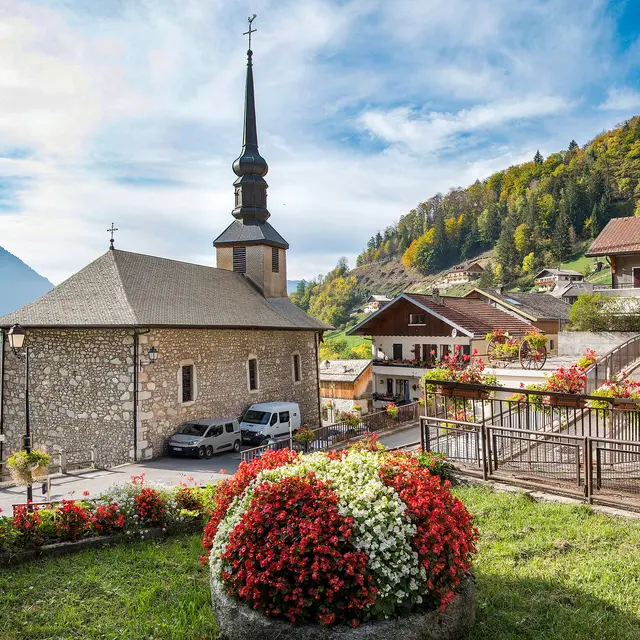
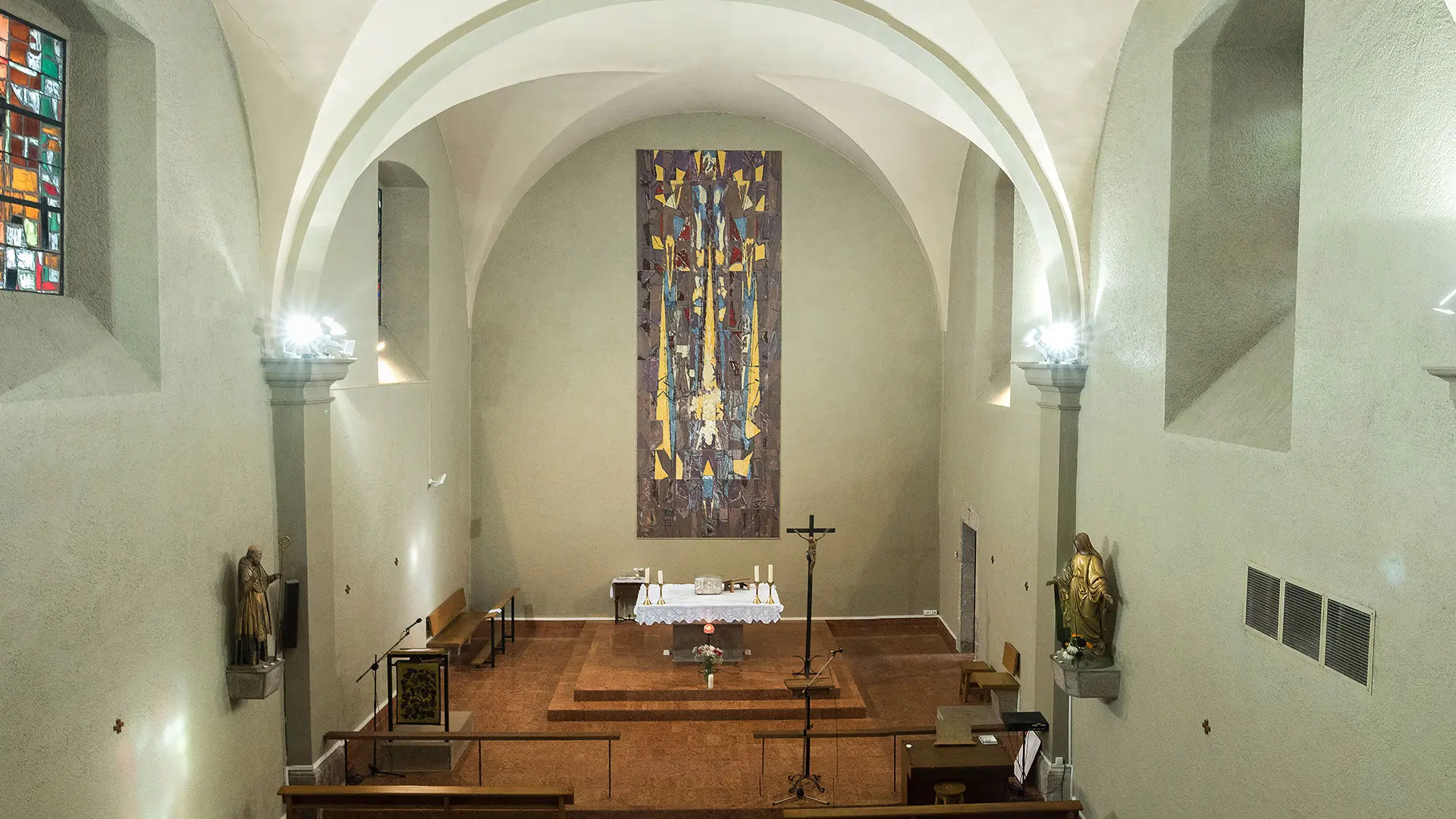
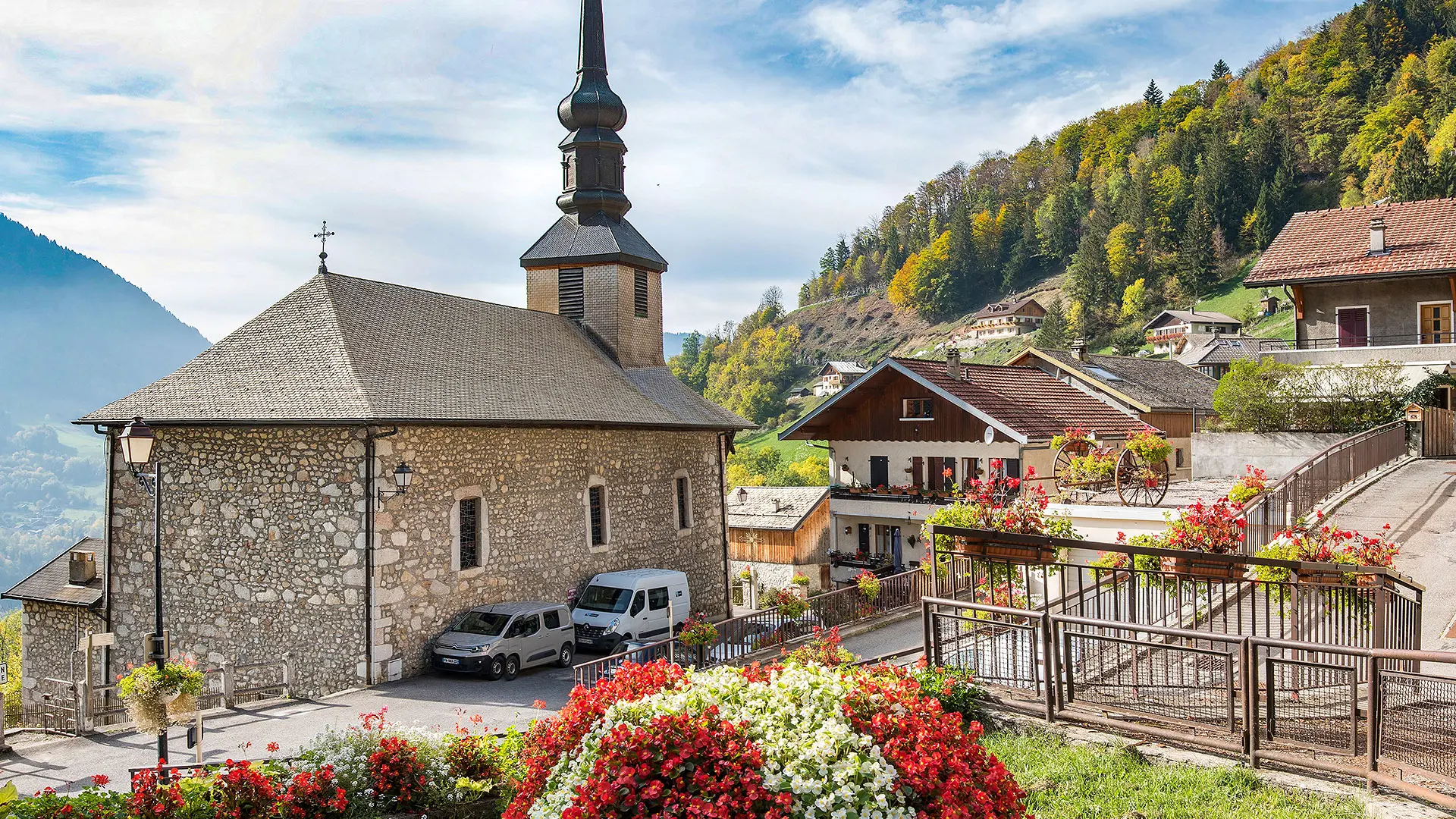
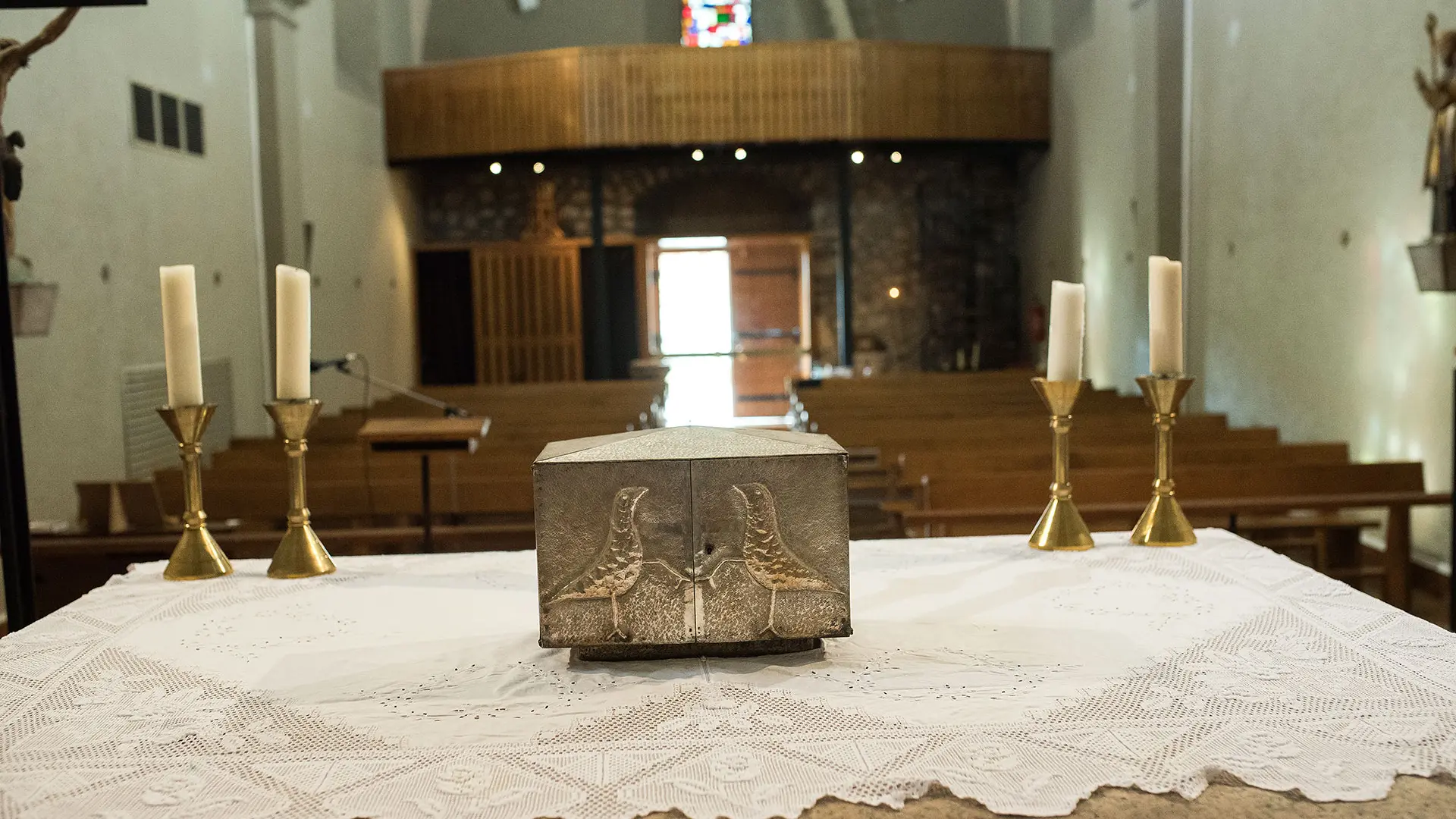
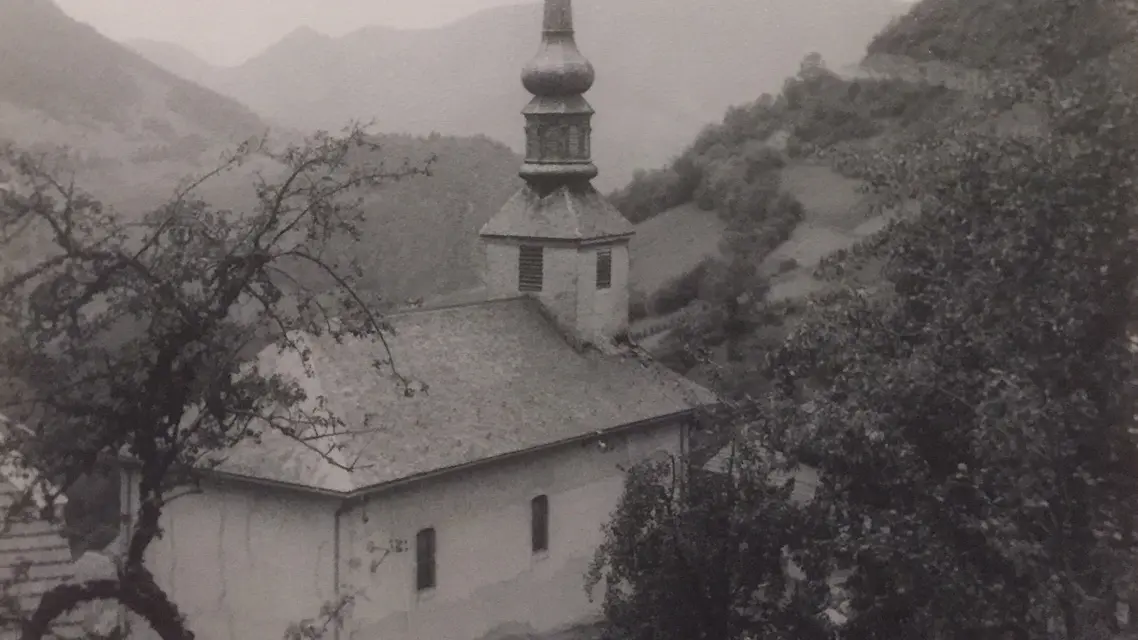
The neo-classical Sardinian-style church of Saint-Pierre de La Forclaz was built in 1829 and renovated in 1961 by the architect Maurice NOVARINA. The minimalist style of the renovated interior contrasts with the artwork by contemporary artists.
Its history : This classified edifice, inscribed as a Historic Monument, was built by the local residents themselves in 1829 and consecrated in 1848. An earlier church, dating from the 13th century, had over time become a chapel attached to the parish of Biot. In a deteriorated state, it was ravaged by fire at the end of the 18th century. This incident led to major repair work and its reconstruction in the 19th century.
From 1663 onwards, a curate resided in the village to spare the clergy the journey from Biot. The path between the two villages was too dangerous, especially in winter. This argument prompted the parish to grant the village its independence in 1671, separating it from Biot.
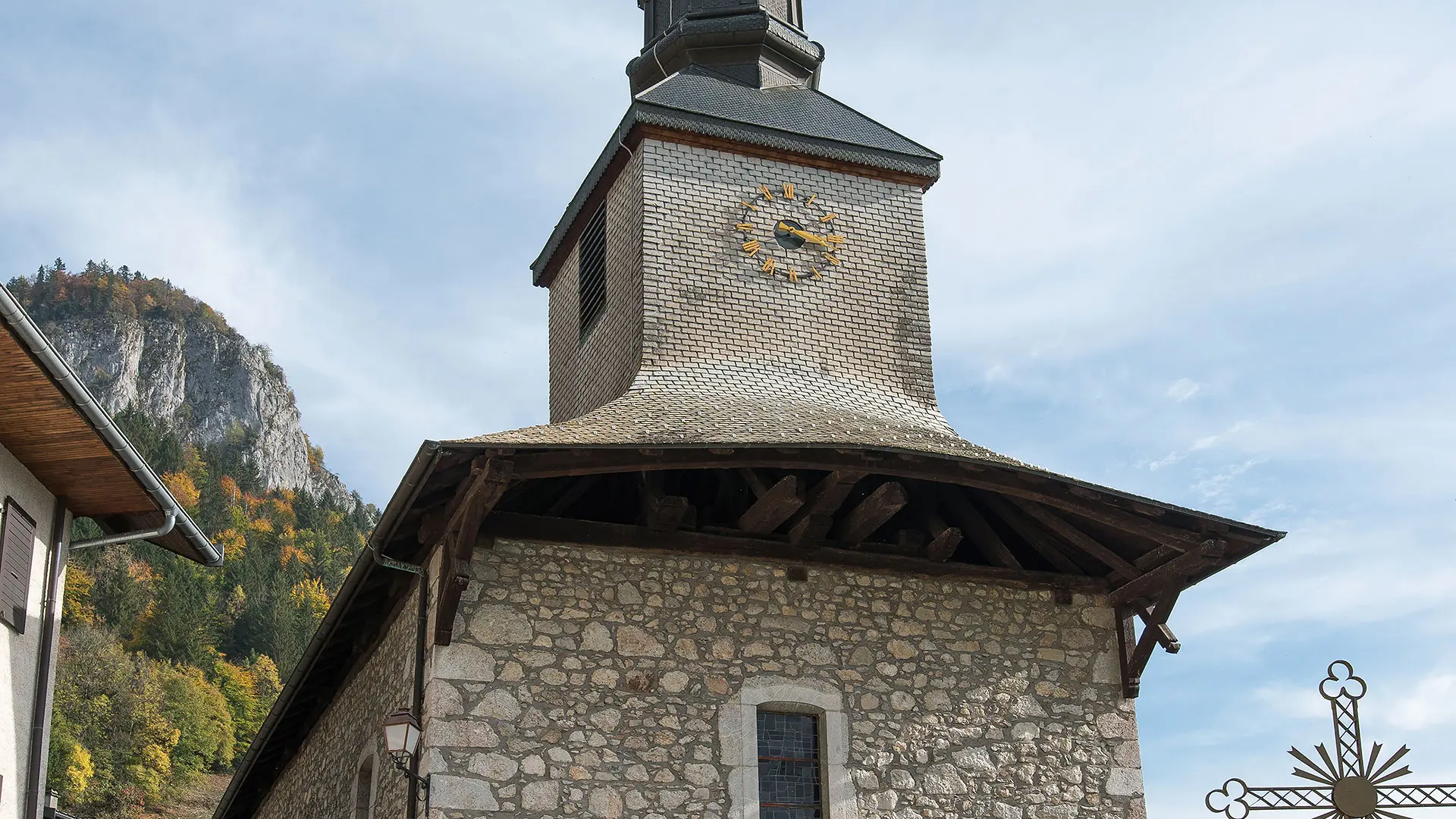
Its architecture : The church, built in the Sardinian Neoclassical style (which is very well known in the valley), is adorned with a bulbous bell tower characteristic of the Savoyard style.
It is notable for incorporating Baroque elements, with its hall-style layout complemented by a square-shaped sacristy on the south side.
It was renovated in 1961 by Maurice Novarina, a renowned architect in the Chablais region, on the initiative of Mayor Robert Morel.
Above the door is a keystone carved from stone, featuring a trefoil cross evoking the House of Savoy.
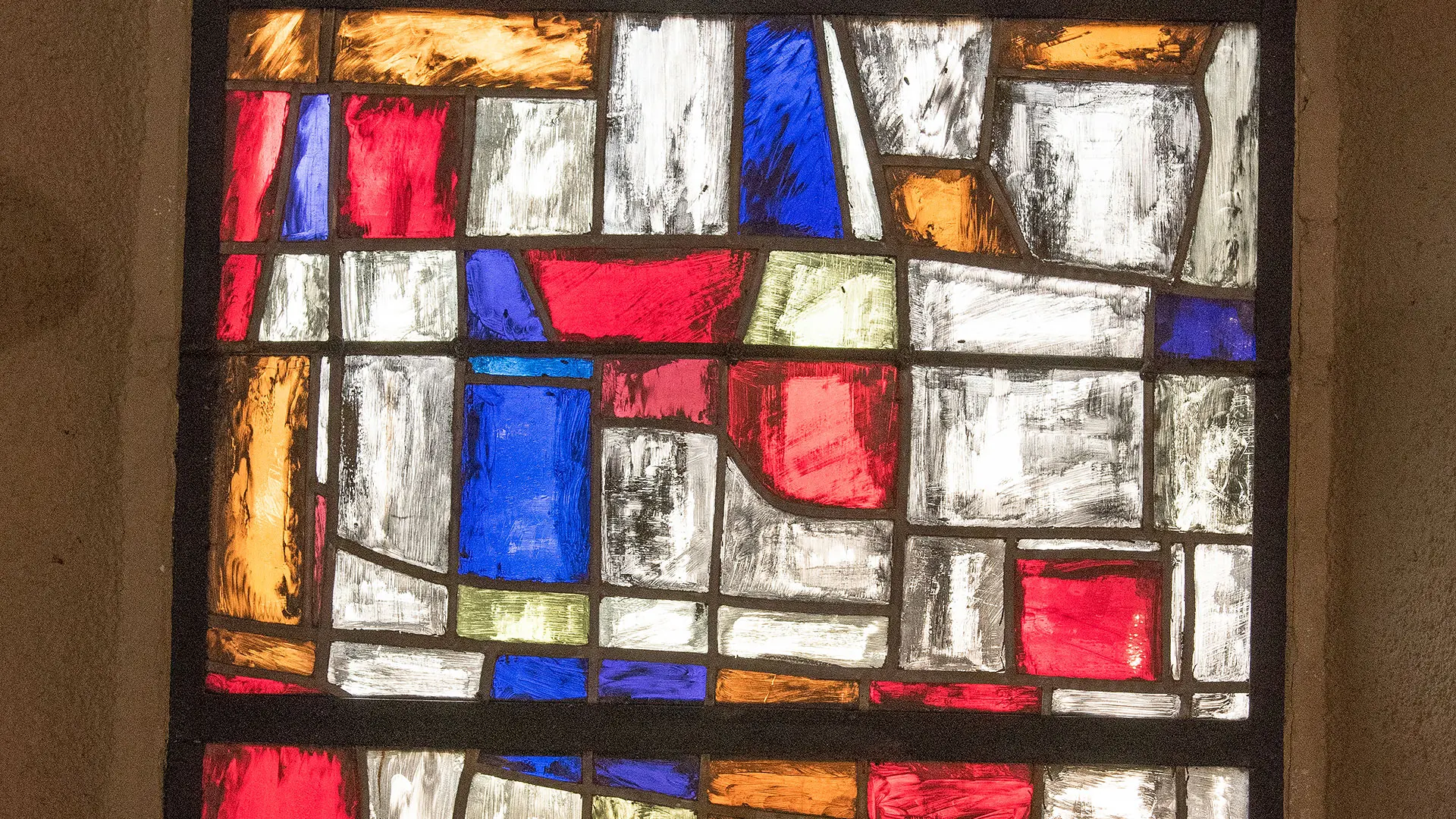
The artists: The mural in the choir and the stained-glass windows are the work of Jacint Salvado. This new altarpiece, inspired by Cubism, is entitled ‘The Trinity’. The artist depicts his vision of the Trinity with the divine presence at the summit, as in the mandorlas of the Middle Ages. Some see in it a crucifixion, where Christ on the cross separates the two side crosses of the good and the bad thief. The two symmetrical white shapes at the top of the composition appear to evoke raised arms and hands.
Another artist worked in this church, François Hugo, a descendant of Victor Hugo. He worked on the tabernacle, the baptismal font, the cross and the candlestick, created to illustrate the text of the Gospel of Saint Mark.
All that remains of the 19th-century Baroque decoration are the two gilded wooden statues of the Virgin Mary and Saint François de Sales and the pink La Vernaz marble stoup, which sets off the red Italian marble floor.