



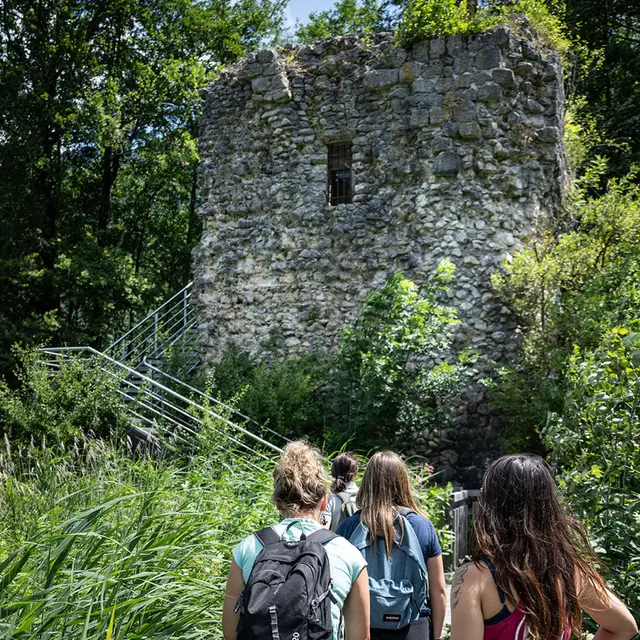
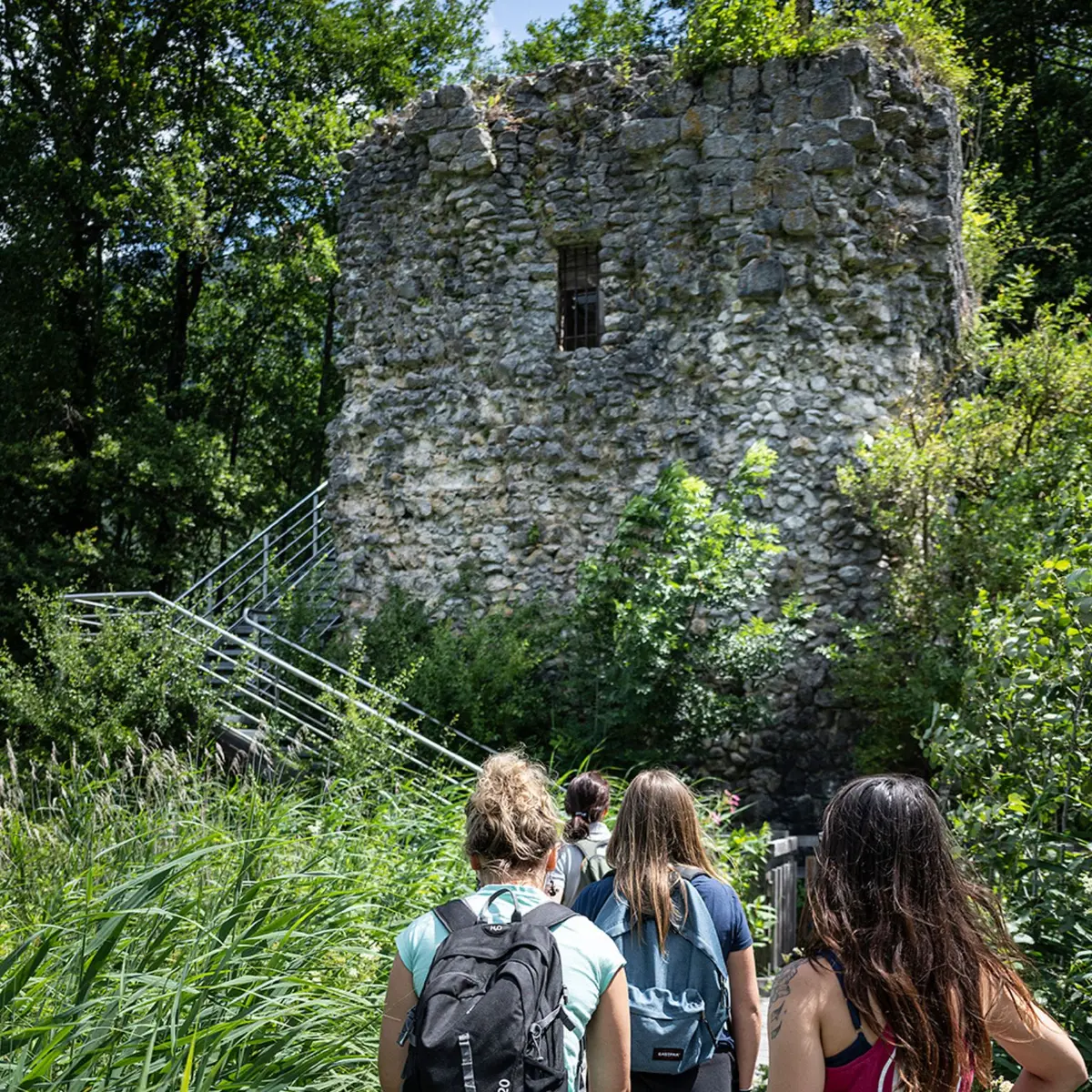
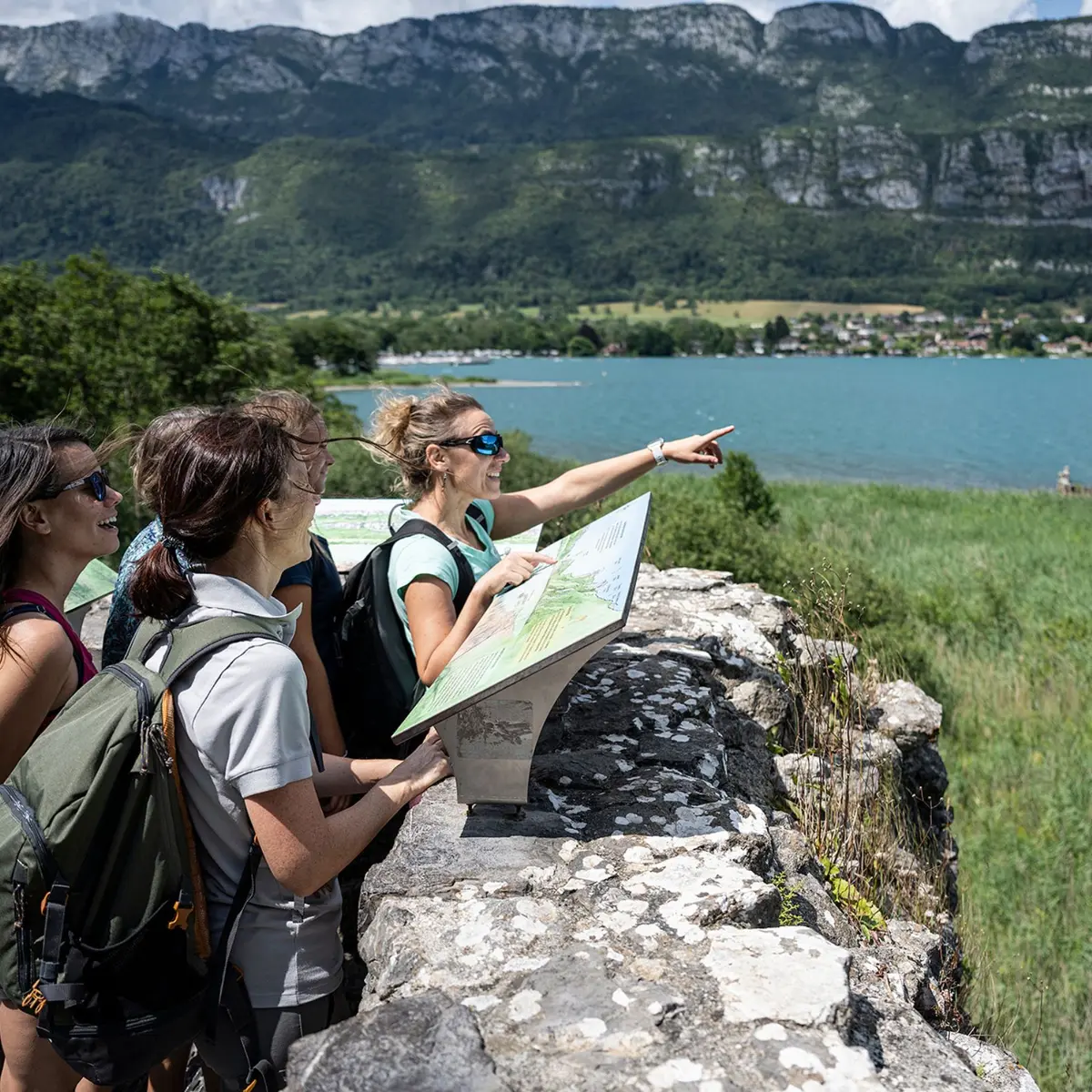
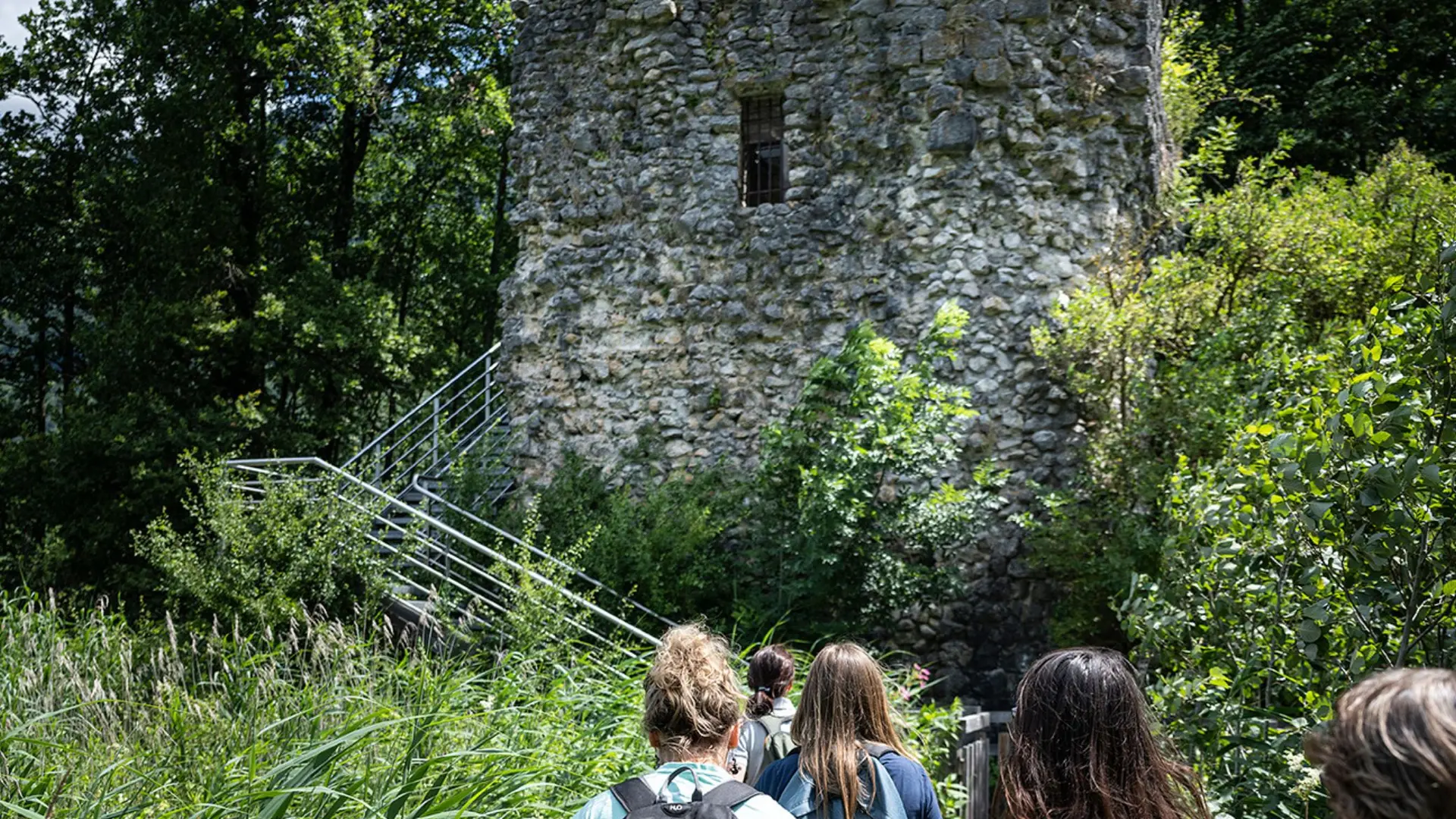

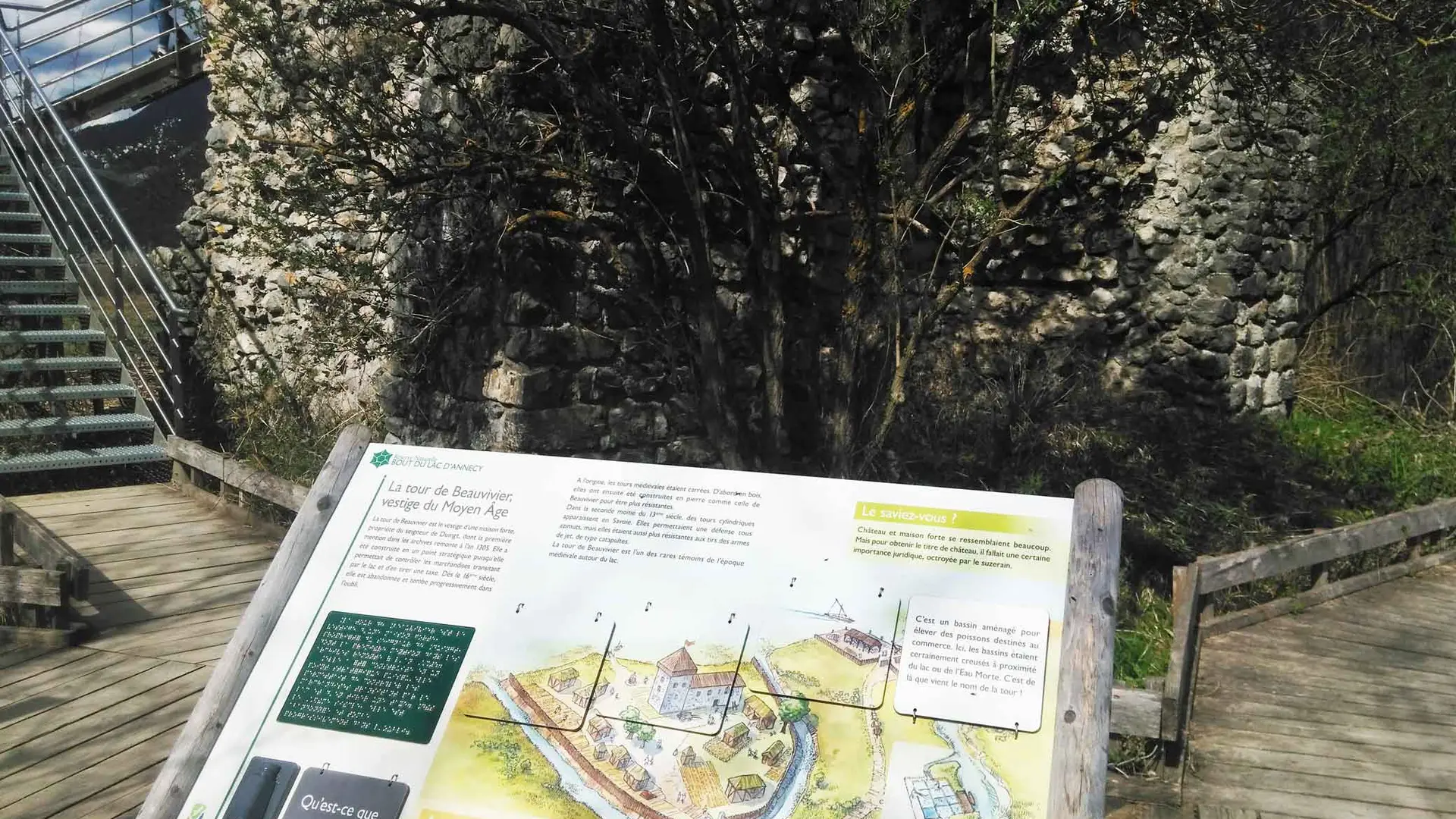
Roofless ruin from the Middle Ages, this building towers over lake Annecy (with recent stairs). It probably was the centre of a fortified lordly residence with an economic role rather than a watchtower as tradition would have it.
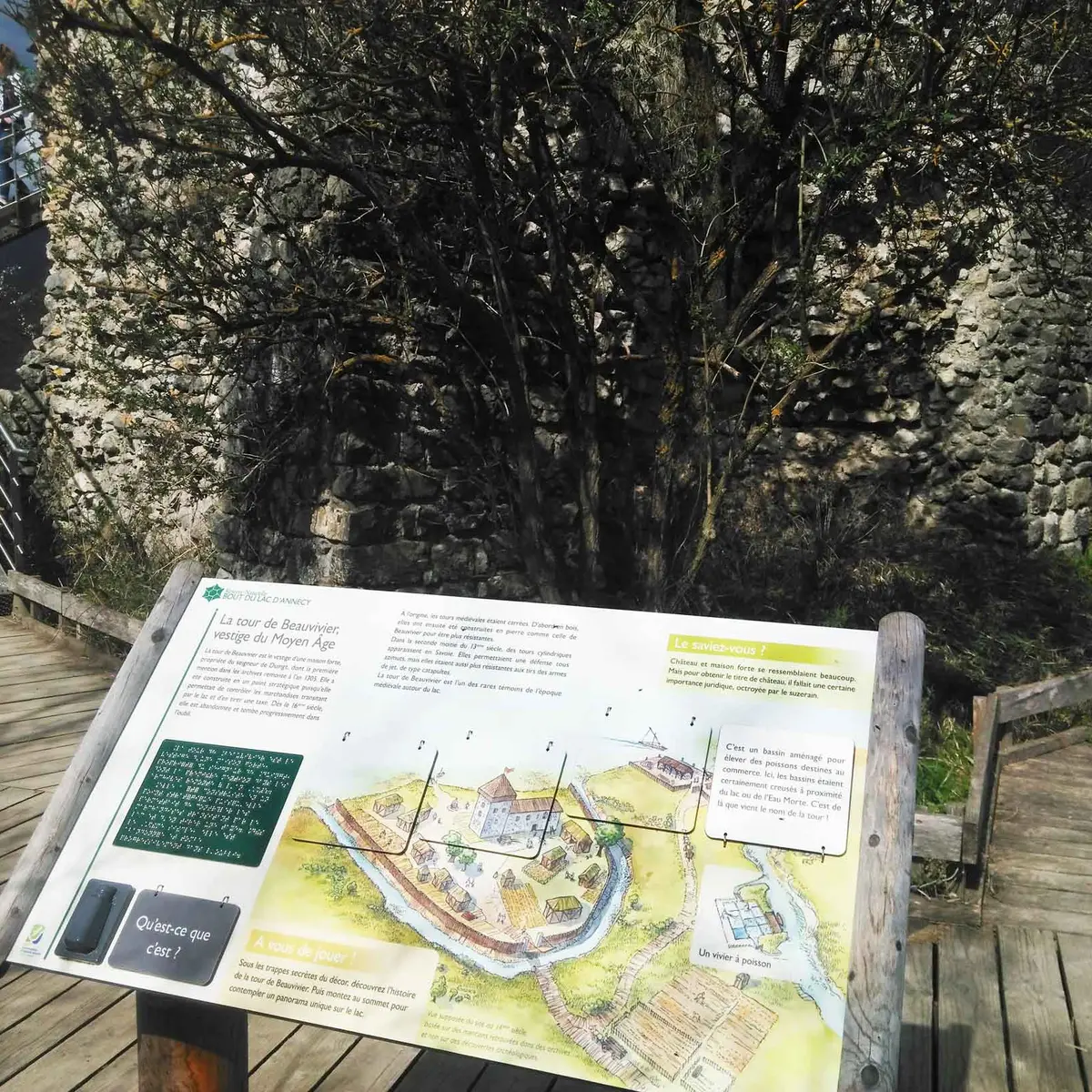
The Beauvivier site is mentioned in the 9th century in a chart through which King Lothaire II (835-869) gives the Dulzianum villa (Doussard) - a property located in the marshes - to his wife Theuteberge. Then around 1305 Beauvivier appears in a text mentioning a fortified manor house with a chapel belonging to the Duingt family, provided with an important judicial role and surrounded with ditches, agricultural lands, barns, mills, threshers, fisheries and a harbour.
The silting of the site probably led to its desertion.
The Beauvivier tower is a 7.30m x 6.90m quadrilateral building with an indoors space of 3.20m x 3.25m. Built with roughly squared off limestone rubbles, you can enter it through a recent metal staircase. The ground floor is windowless and the access is through a centring arch door on the first floor.
The architectural characteristics of the tower - a roughly leveled brickwork, a quadrangular plane, a windowless ground floor, an access through a centring arch door on the first floor, very thick walls and the absence of defensive elements - make it a typical tower from the late 12th or early 13th century. It can be compared to the local towers of Ugine (the Castle), Albertville (Conflans), Montailleur (the Castle), Tournon (Tourmotte) etc.